Kachemak Crane Watch is dedicated to the protection of Sandhill Cranes and their habitat in Homer, Alaska and the surrounding Kachemak Bay area.
We record reports of:
- distribution and abundance of cranes from Anchor Point to the head of Kachemak Bay;
- nests and colts (chicks);
- population numbers;
- arrive and departure dates; and
- mortality due to eagle predation, dogs, and other causes.
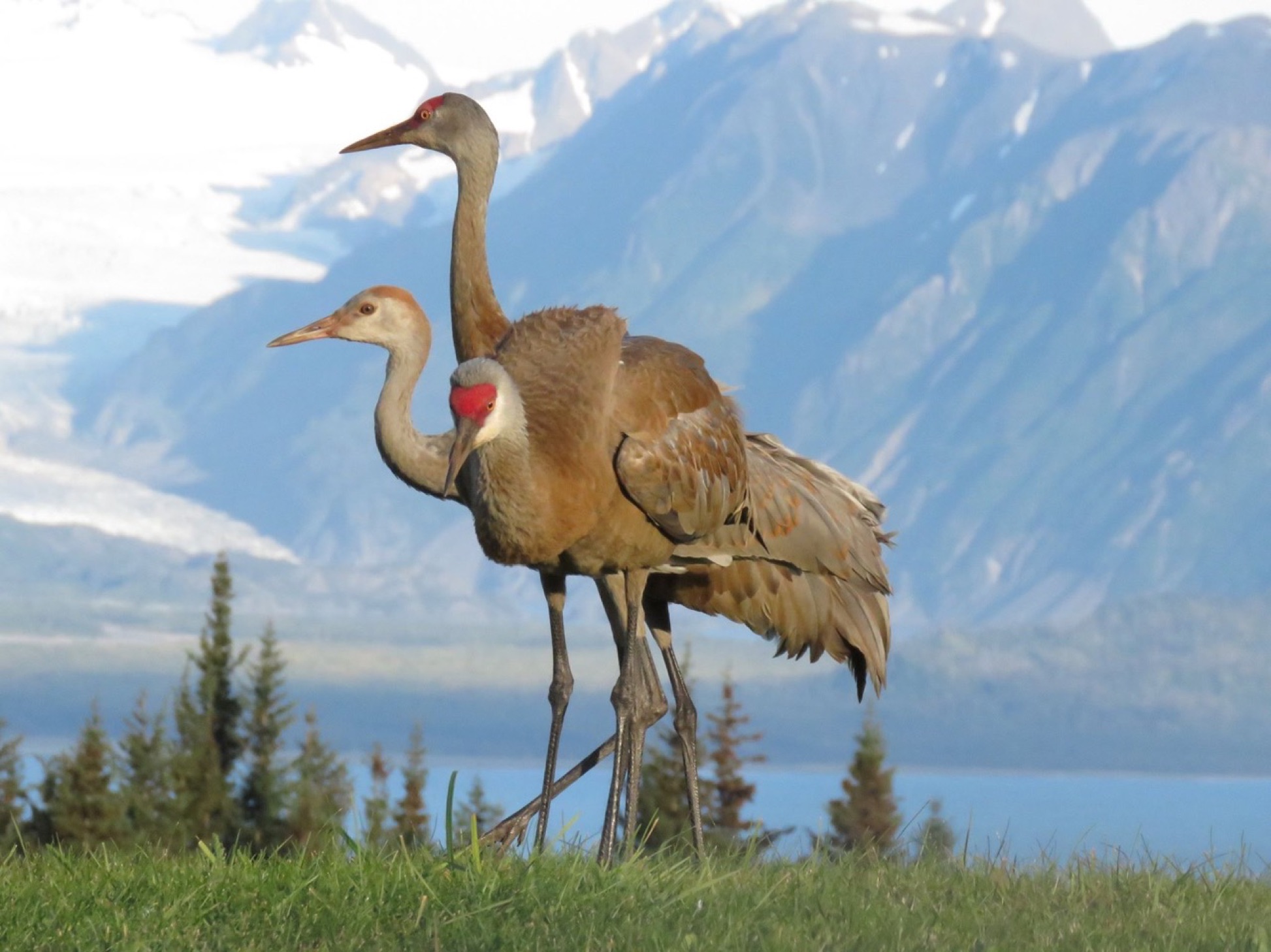
What to Report:
- How many cranes you saw
- Where and when you saw them – the date and coordinates (lat and long, if available) or specific place name
- What they were doing – note any territorial behavior that might indicate a nest or young nearby
- Number of young, if any
- What kind of habitat they were in: e.g. beach, slough, wetland, forest, road, estuary, upland grasslands, island
Please approach them carefully, they are very sensitive to disturbance during the breeding season.
Two ways to enter your observations:
- Send an email to reports@cranewatch.org
- Call Call 907-235-6262
Please include your contact information in case we need additional information.